Fifty, Five Hundred, Five Grand: A Brick Spender's Field Guide

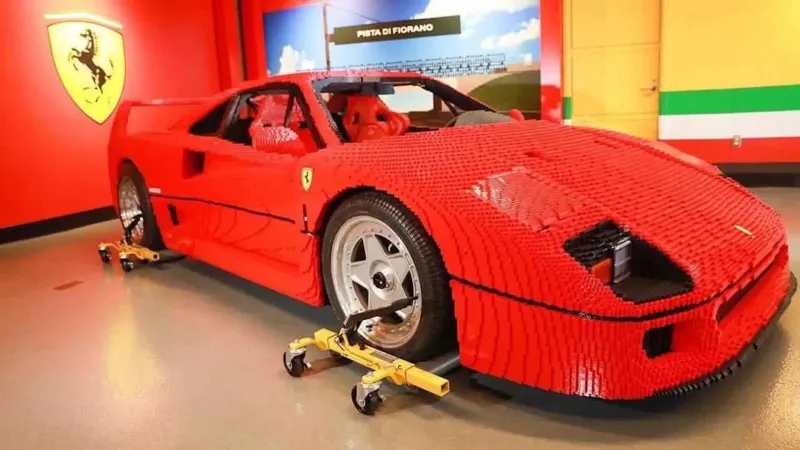
Photo: Moheen Reeyad, CC BY-SA 4.0, via Wikimedia Commons
Every hobby has its money questions, but brick building's are uniquely literal: how much brick can a buck buy? We dug into 2026 pricing across the big retailers, talked to resellers who flip sets for a living, and built a field guide for three very different wallets.
What $50 Gets You
Fifty bucks is the gateway tier, and honestly, it's never been better. Current pricing trends put the average mid-size set at roughly 8 to 10 cents per piece, which means your $50 lands you somewhere in the 500–700 piece range if you shop smart.
The sweet spot here is the mid-tier themed sets — think small Creator 3-in-1 builds, a City set or two, or one of the smaller botanical builds that have exploded in popularity. These are the sets you build on a rainy Saturday afternoon and immediately want on your desk.
Pro move: Watch for the big-box rotation. Target and Walmart cycle clearance hard in January and July, and per-piece costs can drop to 5–6 cents on discounted stock. Patient shoppers effectively double their brick budget twice a year.
What $500 Gets You
Now we're talking commitment. Five hundred dollars is the threshold where collectors make real choices: one flagship set, or a curated shelf of mid-sizers?
The flagship route gets you into the upper echelon — the large Creator Expert and Icons-tier builds that take a full week of evenings and command a room when finished. Per-piece cost on these runs 7–9 cents, and the build experience is genuinely different: more techniques, more mechanical functions, more "wait, THAT'S how it goes together?" moments.
The curated route — five or six $80–$100 sets — builds a more varied display and hedges your bets. If one disappoints, you've still got four winners.
This is also where resale thinking starts to matter. "At $500, people should start caring about what holds value," says a reseller we'll call JT, who's been flipping retired sets for six years. "Licenses matter. Star Wars, Harry Potter, the modular buildings — those retire and climb. A generic licensed set from a dying franchise? That's your clearance-aisle future."
What $5,000 Gets You
Five grand changes your relationship with the hobby. This is grail territory: multiple flagships, back-catalog hunting for retired sets, or one serious collector's vault.
It's also where investment talk gets real. JT's rules for spotting "investment bricks":
- Buy at or near release, never at hype prices. The margin lives in the gap between retail and retirement.
- Big piece counts at low per-piece costs — the big modular sets and large licensed builds historically appreciate best once retired.
- Avoid the discount darlings. If a set is perpetually 30% off at every big-box store, the market is telling you something. Oversupplied sets rarely become collectibles.
- Sealed beats opened — but barely. A sealed set in a smoke-free, climate-stable space appreciates fastest, though complete opened sets with boxes retain strong value too.
His caution: "Treat it like a side bet, not a 401(k). The sets that soar are unpredictable. Buy what you'd be happy to build anyway."
The Real Answer
Here's the thing none of the spreadsheets capture: the best-value set is the one you actually build. Resale charts are fun, but a $5,000 shelf of sealed boxes you never open is just expensive storage. Whether you're spending $50 or $5,000, the ROI that matters is the hours at the table, the click of the studs, and the finished build you can't stop looking at.
Spend what you can enjoy. Then build the heck out of it.