The Color Wars: Inside the Fierce, Funny World of Brick Sorting Philosophies
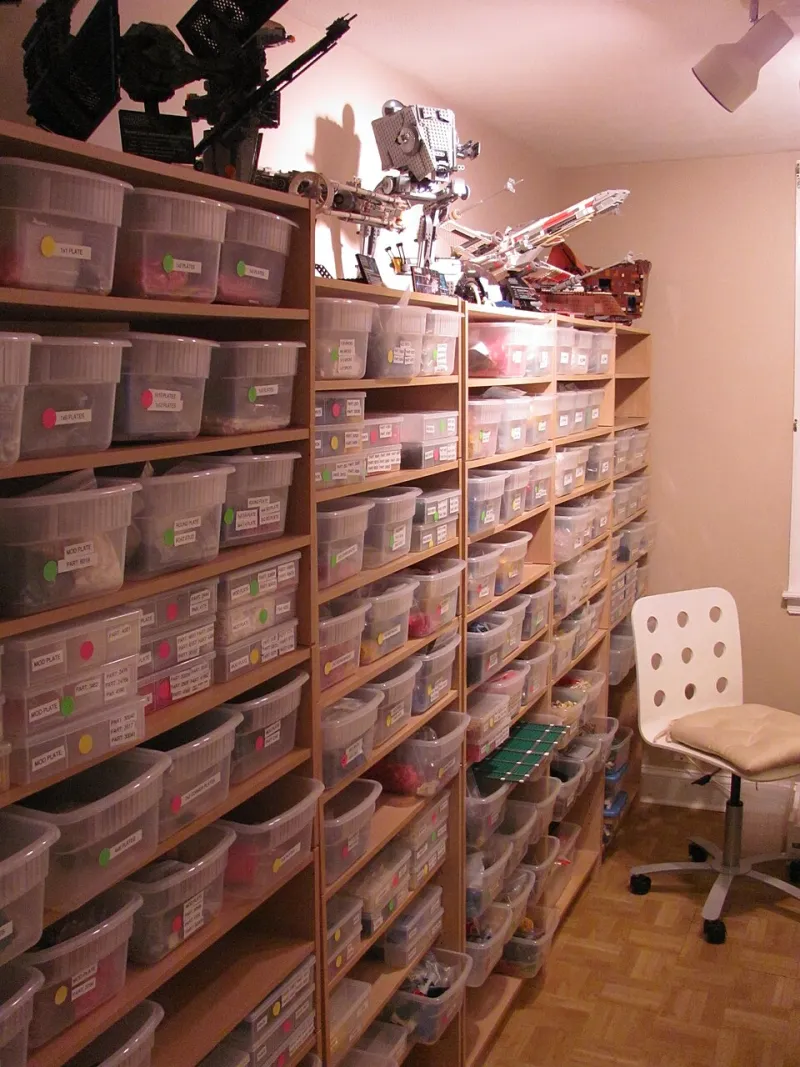
Photo: Joe Miserendino from Clifton Heights, USA, CC BY-SA 2.0, via Wikimedia Commons
Somewhere in suburban Ohio, a retired schoolteacher named Diane keeps 40,000 bricks organized by color across eighteen IKEA KALLAX shelves. Three states away, a software engineer in Austin dumps his entire collection into two rubbermaid totes and calls it a day. Both consider themselves collectors. Both are convinced the other one is doing it wrong.
Welcome to the great brick sorting debate — the quiet, surprisingly heated argument happening in basements and spare rooms across America.
The Moment It Breaks
Nobody starts out organized. You buy a set, you build it, you shelve it. Then another. Then your kid's birthday haul merges with your own, a garage sale lot shows up, and suddenly you're elbow-deep in a cardboard box at 11 p.m. looking for one specific 2x2 in trans-red.
That's the breaking point. Ask any serious collector and they can tell you the exact moment their system collapsed.
"It was Christmas 2019," says Marcus, a collector from Denver who now owns over $900 worth of storage furniture. "I tore apart three sets to find a part I needed. Three. That's when I bought my first drawer cabinet. My wife knew something had changed."
Team Color: The Purists
The most common philosophy is sorting by color, and its adherents speak about it with near-religious conviction. Everything blue together, everything gray together, bricks and plates and tiles separated within each hue.
The logic is simple: when you're building, you think in color. You know you need a red piece. You don't necessarily know it's a 1x4 plate with a specific underside. Color sorting matches how the brain actually creates.
The downside? A single drawer of "gray" can hold hundreds of different parts. Digging is real. Purists accept this as the cost of doing business.
Team Set: The Archivists
Then there are the archivists — collectors who keep sets intact, bagged and labeled, often in stackable containers. For them, the collection is a library, not a raw material pile.
Archivists can rebuild any set on demand, verify completeness, and resell without the nightmare of reassembly. What they can't easily do is freestyle. Pulling 300 assorted pieces from twelve different labeled boxes for a custom build is its own special torture.
The Chaos Faction
And then there are the bin people. One bin. Maybe two. Everything mixed.
"It's not laziness, it's a philosophy," insists Jess from Portland. "Every dig is a treasure hunt. I find parts I forgot I owned. My kids build with me because the barrier is zero — you just dump it out and go."
Purists describe the chaos faction the way germophobes describe a sponge left in the sink. The chaos faction describes purists as people who've mistaken a hobby for a filing job. Both have a point.
So Which Is Right?
After talking to dozens of collectors, here's the honest answer: the system matters less than the honesty about how you build. If you mostly rebuild official sets, archive. If you make customs, sort by color or even by part type. If you build with kids, embrace the bin.
The one universal truth? Whatever system you choose, you'll eventually outgrow it, tear it apart, and start over. In the brick world, even your storage is a build that's never done.
And that scattered set you're never quite going to reassemble? Don't think of it as a lost friendship. Think of it as raw material waiting for its next job — which, if we're being honest, is what the whole hobby is about anyway.