Two Collections, One Shelf: Couples Who Cracked the Code of Sharing Their Bricks
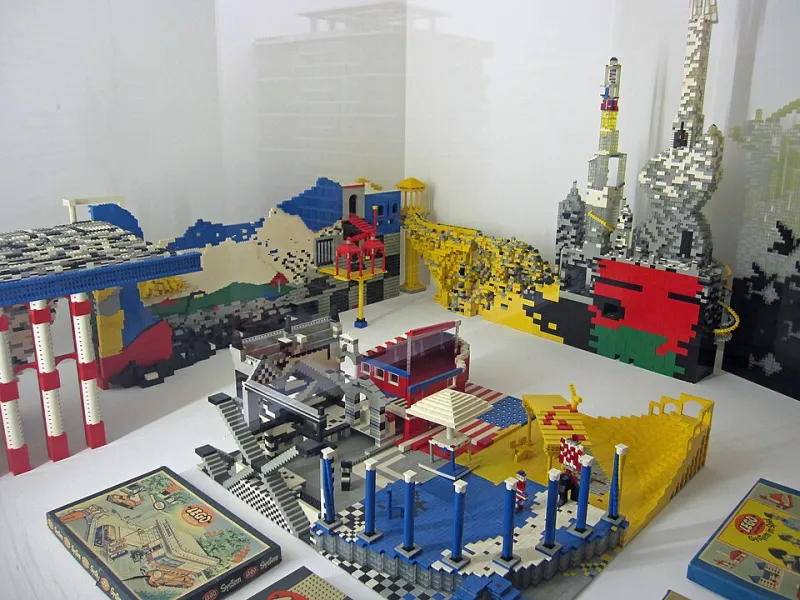
Photo: InSapphoWeTrust, CC BY-SA 2.0, via Wikimedia Commons
Ask any couple what the hardest part of moving in together is, and you'll get the usual answers: whose couch stays, how to split closet space, whether a Keurig counts as a coffee maker. Nobody warns you about the bricks.
When two LEGO hobbyists decide to share a home, they're not just merging furniture. They're merging years — sometimes decades — of sorted minifigures, half-built modular buildings, and bins with very strong opinions attached to them. We spoke with five couples from Portland to Atlanta about how they made it work, and honestly, some of their solutions belong in a relationship textbook.
The Treaty of the Bookshelf
Marcus and Elena Tran-Whitaker, together nine years and married for four, started with what they now call "the treaty." Elena, a lifelong fan whose childhood collection survived three moves intact, and Marcus, who got back into the hobby during the pandemic, sat down before the moving truck arrived and drew literal boundaries.
"We had a map," Marcus laughs. "A hand-drawn map of the living room with zones on it. Her city display, my space stuff, and a shared shelf in the middle."
That shared shelf became the heart of their setup. It's where collaborative builds live — the sets they buy together, the creations they make as a team. Everything else stays in its lane.
Zones, Labels, and the Peace They Buy
Couples therapists will tell you that clear expectations prevent most conflicts. Apparently that applies to bricks too.
Dana and Priya Ramesh, who share a two-bedroom apartment in Chicago, went full administrative. Their display cases have labeled shelves, their parts drawers are color-coded by owner, and there's a whiteboard tracking which shared set is "in progress."
"It sounds insane," Dana admits, "but we've never once argued about bricks. Meanwhile our friends who combined kitchens are still fighting about blenders."
The labeling thing came from Priya, a project manager by trade. "I treat it like any shared resource," she says. "You document, you communicate, you don't touch someone else's minifigures without asking."
That last rule — the minifigure rule — came up in nearly every conversation we had. Swapping a minifigure's hair piece or head without permission is apparently the fastest way to start a domestic incident.
The 'One Brick Each' Compromise
Not every couple goes full zoning ordinance. Jake and Colleen Murphy of Austin run a leaner operation: when a new set catches their eye, they alternate who buys it. One brick each, one set each, a running tally that's been going since 2021.
"Colleen's up next," Jake tells me, checking a note on his phone. "She's eyeing the botanical collection. I'm not thrilled, but rules are rules."
The alternation system has a hidden benefit: it slows acquisitions down. With only every other purchase to look forward to, both of them report being more intentional about what actually makes it into the house.
When Collections Collide
The trickiest scenario isn't display space — it's duplicate parts. Two people who both own the same retired set now have doubles of everything, and what happens to the extras can get surprisingly emotional.
Sarah and Tom Beckett, married eleven years, solved it with a joint garage sale that funded their first big collaborative build. "Selling my duplicate of a set I'd had since I was ten felt weird for about a minute," Sarah says. "Then we used the money for the Empire State Building set and it kind of became a symbol. Out with the doubles, in with something we built together."
Advice for the About-to-Move-In Crowd
If you and your partner are both brick people and a move is on the horizon, here's what our couples wish they'd known:
- Talk before the boxes are packed. Every couple that negotiated early said the transition was painless. The one couple that didn't spent their first month cohabiting in low-grade brick-related tension.
- Keep one solo space. Even in the most merged households, everyone kept something that was entirely theirs — a shelf, a drawer, a corner. Independence within the union matters.
- Invent your own weird rules and write them down. The Murphy's tally system, the Tranz-Whitaker's map, the Rameshes' whiteboard — the specifics don't matter. The shared agreement does.
- Build something together first. Every couple pointed to a joint build as the moment the merge stopped feeling like a negotiation and started feeling like a partnership.
At the end of the day, none of this is really about plastic. It's about making room — literally — for the things the person you love cares about. The bricks just make it visible.
As Elena put it, standing in front of that shared middle shelf: "Anyone can combine a Netflix account. Merging a LEGO collection? That's commitment."
Got a brick-merging story of your own? We want to hear the house rules you've invented. Drop them in the comments — the weirder, the better.