No Screens, All Studs: The Families Turning Sundays Into Brick-Building Rituals
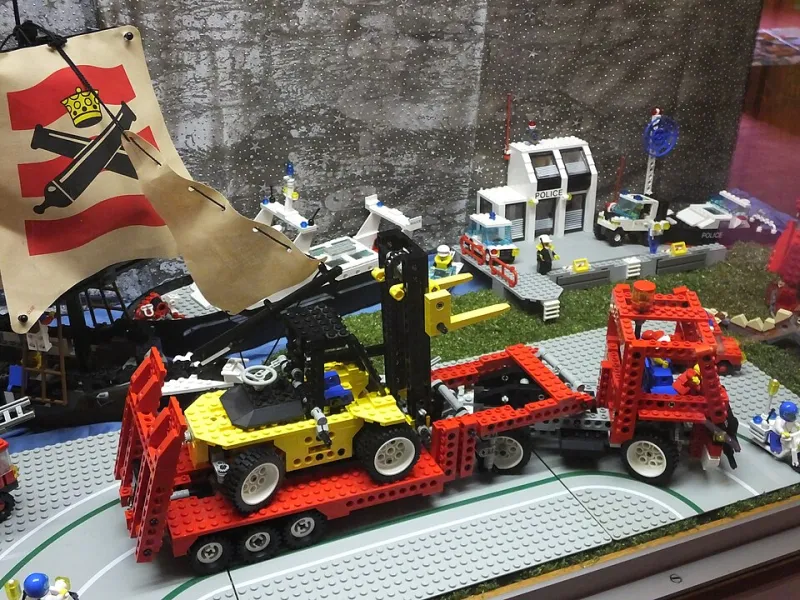
Photo: Photograph by Clem Rutter, Rochester, Kent. (www.clemrutter.net)., CC BY-SA 3.0, via Wikimedia Commons
It's 2 p.m. on a Sunday in suburban Ohio, and the Henderson family's dining room table has vanished. In its place: a half-finished brick metropolis, complete with a fire station, a suspiciously tall donut shop, and a monorail that four-year-old Mia insists is 'almost done.'
This is Screen-Free Sunday, Henderson style — and the Hendersons are far from alone.
The Trend Nobody Saw Coming
Ask around and you'll find versions of this ritual playing out in living rooms from Portland to Providence. Parents, burned out on negotiating with tablets and tired of watching their kids melt down when the Wi-Fi blinks, are instituting a simple weekly rule: no screens, just bricks.
For the Hendersons, it started as desperation. 'We tried board games, we tried hikes,' says dad Marcus. 'The board games ended in tears and the hikes ended in complaints. The bricks just... worked.' Two years later, the family's Sunday build sessions are non-negotiable — even for teenagers.
That's the surprising part. This isn't just a toddler activity. Multi-generational builds are becoming the norm, with grandparents, tweens, and parents all claiming territory on the same baseplate.
The Skyline Showdown
In Austin, father-daughter duo Ray and Priya (age nine) have turned building into friendly competition. Every Sunday, they get forty-five minutes and a shared bin of bricks. The challenge rotates — tallest tower, sturdiest bridge, most convincing spaceship.
'She's beaten me three weeks straight with the bridge category,' Ray admits. 'Kid has no fear of structural failure.'
The loser does dishes for the week. The winner gets bragging rights and, apparently, an insatiable hunger for more hinges and slope pieces. Priya's Christmas list this year read like a parts inventory.
The Eight-Month Town
Then there are the long-haul builders. In Minnesota, three generations of the Olsons have been constructing a single brick town since last spring. Grandma Delores handles landscaping. Grandpa Walt, a retired plumber, insists on functional-looking water towers. The grandkids run zoning, which mostly means adding zoos wherever they fit.
'It's become the thing we do together,' says middle-generation mom Karen. 'My parents don't always have things to talk about with the kids. But they have this. They have the town.'
The town now occupies a dedicated folding table in the basement and has its own internal politics, including a heated dispute over whether the airport should've been built near the elementary school. (It should not have. Everyone agrees now.)
What the Experts Say
Can a bin of mixed bricks genuinely compete with an iPad? Child development specialists say the comparison isn't as lopsided as it seems.
Open-ended building play hits a bunch of developmental buttons at once: fine motor skills, spatial reasoning, planning, frustration tolerance, and — when done together — negotiation and collaboration. Unlike a tablet, a brick build doesn't hand you a finished experience. You make the experience.
'What makes collaborative building so valuable is the low-stakes conflict,' one early childhood researcher told us. 'A tower falls. Somebody wants the last red piece. Kids practice handling small frustrations in a safe space. Screens rarely require that of you.'
There's also the boredom factor — in a good way. With no algorithm feeding the next activity, kids have to generate their own ideas. That's where the creativity lives.
Tips From Families Who Stuck With It
We asked veteran Screen-Free Sunday households what actually works:
- Lower the stakes. The first few sessions might be chaotic or short. That's fine. The ritual matters more than the output.
- Mixed bricks beat kits. Sets are fun, but a big unsorted bin forces imagination. Several families buy bulk lots or thrift-store hauls just for Sundays.
- Adults build too. Kids lose interest fast if parents treat it as babysitting. Get on the floor. Build something bad. Let them critique it.
- Let projects live. The Olson town works because it doesn't get torn down. A folding table in the basement or a rolling cart keeps momentum alive.
- Keep a theme jar. When motivation dips, pull a random prompt: lighthouse, pizza shop, roller coaster. Instant restart.
The Verdict at the Table
Back in Ohio, Mia's monorail is still 'almost done,' and the Hendersons have no plans to stop. Marcus puts it plainly: 'I can't tell you what my kids watched on YouTube last month. I can tell you everything about the donut shop we built together.'
Maybe that's the whole pitch. Screens give families content. Bricks give them a shared project — one wobbly tower, one disputed airport, one Sunday at a time.