Wheels On the Bricks: The Traveling Build Labs Bringing LEGO to Towns That Forgot How to Play
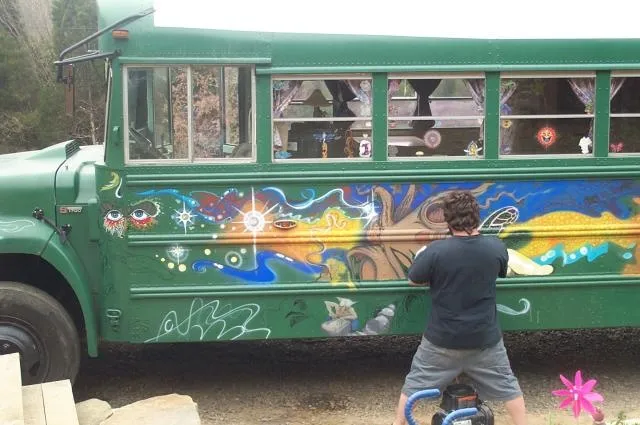
Photo: colorful converted school bus mobile workshop kids activities, via i.pinimg.com
The bus pulls into the Harlan County fairgrounds on a Thursday morning, and by noon there's a line of kids snaking past the funnel cake stand. Inside, it's 30 feet of pure imagination: sorting trays bolted to the walls, build tables where church pews used to be, and enough loose bricks to make a grown collector weep.
This is the Brick Wagon, and it's part of a quiet movement rolling across rural America.
No Toy Store? No Problem
Ask anyone who grew up in a small town what they lacked, and the answer is rarely money or desire. It's access. When the nearest craft store is a 90-minute drive and the closest maker space might as well be on the moon, kids get creative with what they've got — which, too often, is a tablet and a spotty Wi-Fi signal.
Mobile brick labs are fixing that, one parking lot at a time.
"We serve towns where the school art program got cut in 2009 and never came back," says Denny Ruiz, who drives a retired shuttle bus he gutted and rebuilt himself across the Dakotas and western Minnesota. "These kids have never seen a bulk brick wall. They've never sorted a bin. You watch a ten-year-old hold up their first completed build and you understand exactly why the bus exists."
The Builds Behind the Wheel
Every mobile lab has an origin story, and most of them start the same way: a builder with too many bricks and a hunch.
Ruiz's hunch came after a 2019 trip to visit family on the Rosebud Reservation, where he brought a storage tote of assorted bricks for his nieces and nephews. Word spread. By the end of the weekend, forty kids had come through the living room.
"I drove home thinking, that wasn't a visit. That was a pilot program."
Down in Tennessee, the story is different but the heartbeat is the same. Marla and Gene Whitfield converted a horse trailer into the Rolling Studs, a fold-out build station that sets up shop outside rural elementary schools and at county fairs from Knoxville to Jackson. Gene spent 34 years as a school bus mechanic; the trailer's suspension has never been happier.
"We do about 60 stops a year," Marla says. "And I'd guess at half of them, somebody's grandmother pulls us aside afterward and asks where she can donate bricks. That's how it grows. That's always how it grows."
What Actually Happens Inside
Forget the image of structured classes and instruction booklets. The best mobile labs run on something closer to organized chaos.
A typical stop works like this: the bus or trailer opens, kids rotate through in 45-minute sessions, and there are exactly three rules. Bricks stay on the tables, share the trays, and wash your hands after lunch. Everything else is fair game.
The builds themselves range from the expected — spaceships, houses, the obligatory sword that's "totally not a sword, it's a laser staff" — to the startlingly local. Ruiz keeps a photo wall inside his bus of builds inspired by the towns he visits: a brick replica of a grain elevator in North Dakota, a water tower in South Dakota, a surprisingly accurate culvert in the middle of nowhere, Wisconsin.
"Kids build what they know," he says. "You just have to hand them the parts and get out of the way."
The Economics of Rolling It Yourself
Here's the part nobody sugarcoats: this is not a cheap hobby to take on the road.
Between fuel, insurance, vehicle maintenance, and the bricks themselves, a season on the road can run a small operation $15,000 to $30,000. Most lab operators patch it together through a mix of school booking fees (usually nominal), grant money from arts and education foundations, and the quiet generosity of brick collectors who hear about the project and ship boxes of their retired inventory.
The Whitfields fund the Rolling Studs partly through Gene's pension and partly through a partnership with a regional fair association that covers their travel between stops. Ruiz leans on donations and sells a handful of custom build kits online — enough, he says, to keep the diesel tank full and the sorting trays stocked.
None of them are getting rich. All of them will tell you that was never the point.
Why It Works
There's a reason the mobile model sticks where stationary programs have struggled. A brick lab that shows up doesn't ask a town to organize anything, fund anything, or staff anything. It arrives, it opens its doors, and for a few hours a community that has no toy store, no maker space, and no hobby shop becomes a town full of builders.
Then it drives away — leaving behind the one thing that actually matters: the idea. Kids go home and build with what they have. Grandparents dig out the attic boxes. Somebody mentions starting a club at the library, and sometimes, that club actually happens.
"The bus is the seed," Ruiz says, watching a group of kids carry their builds off toward the fairgrounds exit. "The town does the growing."
The Brick Wagon's 2025 route is already booked through October, with stops planned across three states and a waiting list that keeps getting longer. If a converted bus rolls into your county fair this summer, do yourself a favor: get in line. Bring a kid if you've got one. Build something.
The bricks, as always, are waiting.